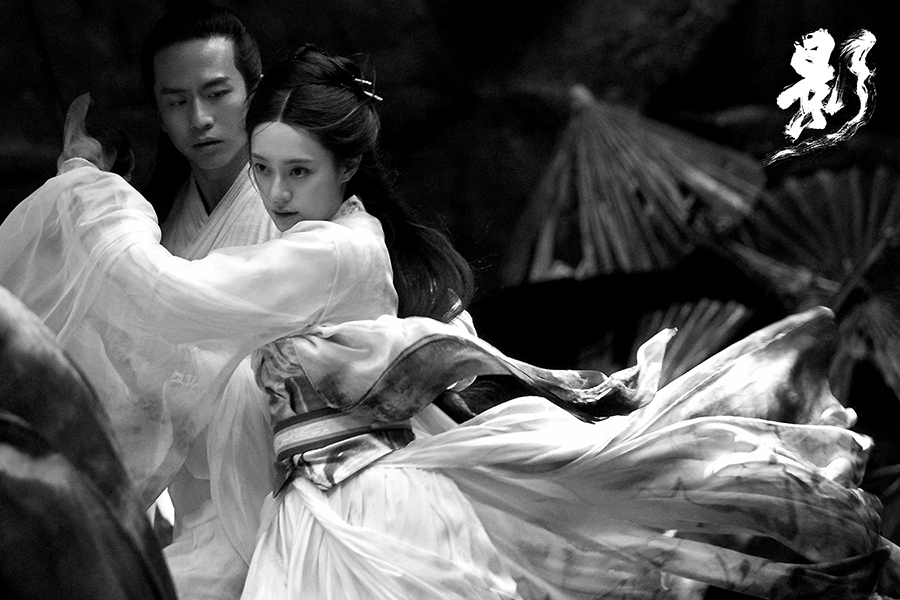
Shadow (Film)
Introduction
Shadow is a 2018 Chinese action-fantasy film directed by the renowned filmmaker Zhang Yimou. Known for his vivid storytelling and rich visual style, Zhang Yimou crafts a narrative set in fictional imperial dynasty, inspired by the history and culture of the Three Kingdoms Period (220-280 AD) of Chinese history. The film explores the concept of shadow men, body doubles who risk their lives for royals and aristocrats. Released in North America by Well Go USA Entertainment, Shadow garnered critical acclaim for its distinctive monochrome aesthetic, inspired by traditional Chinese ink wash paintings, and a compelling plot that intertwines themes of identity and sacrifice. It had its world premiere at the 75th Venice International Film Festival, where it was met with high praise for its artistic execution.
Plot
Shadow unfolds in the legendary era of the Three Kingdoms, focusing on a nameless warrior who acts as a shadow for a high-ranking military officer. The officer, known for his strategic prowess, uses the shadow to navigate the perilous political landscape, ensuring his own survival in an environment fraught with intrigue and betrayal. The narrative delves into the shadow’s struggle for identity and autonomy, shedding light on the complex dynamics between power and loyalty. As the story progresses, the shadow battles both physical and emotional challenges, straddling the fine line between being a mere pawn and a hero in his own right. The film weaves a rich tapestry of action and drama, exploring themes of loyalty and betrayal, and the personal sacrifices that underpin the grand narratives of history.
Cast
Shadow features a talented ensemble cast led by Deng Chao, who delivers a compelling dual performance as both the military officer and his shadow. Deng's portrayal captures the nuanced relationship between the two characters, underscoring the internal conflicts at play. Sun Li, Deng Chao's real-life spouse, enriches the narrative with her portrayal of the officer's wife, bringing depth to the personal dimensions of the story. The film also stars Zheng Kai, Wang Qianyuan, Guan Xiaotong, and Wang Jingchun, each contributing to the film’s layered storytelling. The cast's dynamic performances are integral to the film's exploration of identity and loyalty, providing a human face to the broader historical and political themes.
Production
The production of Shadow marks a significant departure from Zhang Yimou’s previous works, primarily through its distinctive visual style. Inspired by traditional Chinese ink wash painting, the film employs a monochrome palette, a choice that enhances the thematic elements of duality and deception. Zhang Yimou eschewed digital effects, opting instead for meticulously crafted sets and detailed costumes that echo the aesthetic of a traditional painting. The film’s battle sequences were shot in natural conditions, requiring a month-long shoot in the rain to achieve the desired authenticity. The production was a collaboration between several studios, including Le Chuang Entertainment, Perfect Village Entertainment, Tencent Pictures, and Bona Film Group, reflecting a concerted effort to realize Zhang's ambitious vision.
Release
Shadow first premiered at the 75th Venice International Film Festival, where it received critical acclaim for its artistic execution and innovative approach to the martial arts genre. Following its premiere, the film was released in North America, initially opening on limited screens before expanding to a wider release. It also made its debut at the Toronto International Film Festival, further solidifying its international presence. The film's release strategy capitalized on festival circuits to build momentum and attract a diverse audience. In China, Shadow was released during the National Day holiday, a strategic move that contributed to its impressive box office performance, grossing over 627 million yuan.
Awards and Nominations
Shadow was nominated for and won several awards, reflecting its critical and artistic success. At the Venice International Film Festival, Zhang Yimou was honored with the Jaeger-LeCoultre Glory to the Filmmaker prize, acknowledging his innovative contributions to contemporary cinema. The film was also shortlisted for the BFI London Film Festival main competition and received accolades at various other international film festivals. Its nominations and awards underscore the film's impact in both domestic and international markets, highlighting its role in advancing the global appreciation of Chinese cinema.
Cultural Impact
Shadow represents a significant cultural achievement, blending traditional Chinese aesthetics with modern cinematic techniques. Zhang Yimou's use of monochrome visuals and classical Chinese music imbues the film with a unique cultural resonance, offering audiences a glimpse into ancient Chinese art forms. The film's exploration of historical themes through a modern lens has contributed to a renewed interest in Chinese history and culture, both within China and abroad. By juxtaposing historical narratives with contemporary cinematic innovation, Shadow has played a pivotal role in enhancing the visibility and appreciation of Chinese cultural contributions in the global film landscape.








